Horse Boost Official Website › Blog › Ashwagandha On The Horse Boost Panel: The Best Evidence And The Only Real Safety File
From the deskAshwagandha On The Horse Boost Panel: The Best Evidence And The Only Real Safety File
Ashwagandha is the ingredient on this panel with the strongest trials behind it and the only documented liver signal.
Both halves matter. This post goes through the four studies that count, the doses they used against the 82 mg blend, the two published case series on liver injury, and the one group who should ask a clinician before starting.
Why ashwagandha is the interesting name on this panel
Of the nine ingredients on the Horse Boost blend row, ashwagandha is the one that carries both the best evidence and the only real safety file. It is the ingredient most worth a post of its own, for both reasons at once.
It is also the ingredient that sets the comparison used everywhere else on this website. The smallest daily dose that has produced a positive result in a controlled trial of anything on this panel is 240 mg of a standardised ashwagandha extract, and that figure is why the 82 mg blend total is described the way it is on the ingredients page.
This post goes through the evidence in both directions and then says what a buyer should do about it.
What the trials actually did
Four studies matter here and they measured four different things.
- the 240 mg ashwagandha stress trial randomised sixty adults to a placebo or 240 mg of a standardised extract once daily, and measured stress scales and hormone panels.
- the 600 mg ashwagandha trial in overweight, ageing men is the one closest to what this bottle is sold for: a randomised crossover study in overweight men aged forty to seventy with mild fatigue, using a preparation delivering 21 mg of withanolide glycosides a day for eight weeks.
- the 675 mg ashwagandha pilot study in oligospermic men gave 675 mg a day in three doses for ninety days to men with low sperm counts, which is a clinical population rather than a general one.
- a 2024 meta-analysis of ashwagandha for stress and anxiety pooled the stress and anxiety literature in 2024 and found the direction consistent, with the usual caveats about study quality and small samples.
Two things are worth noticing about that list. The doses differ by a factor of nearly three between the smallest and the largest, and the preparations differ as well: a standardised extract, a withanolide-glycoside preparation and a full-spectrum root extract are not interchangeable, which is a recurring problem in botanical research and makes pooled analyses harder to read than they look.
The doses, and the gap to this bottle
Here is the comparison that decides the practical question.
| Study | Daily dose | Duration | Against the whole 82 mg blend |
|---|---|---|---|
| Stress trial | 240 mg standardised extract | 60 days | about 3x the blend |
| Vitality study | 21 mg withanolide glycosides | 8 weeks | a different measure, from a preparation dosed by marker compound |
| Sperm-count pilot | 675 mg full-spectrum root extract | 90 days | about 8x the blend |
| Horse Boost | an undisclosed share of 82 mg, alongside eight other ingredients | as long as you take it | — |
The Horse Boost row is the whole blend, so the ashwagandha share is necessarily smaller than 82 mg and the label does not say by how much.
The second row is the interesting one and it is the one most often misread. Twenty-one milligrams sounds smaller than eighty-two, which invites the conclusion that this bottle could be in range. It is not a comparable figure: 21 mg is the amount of a specific marker compound delivered, from a preparation standardised to produce it, not the weight of extract in the capsule. The Horse Boost panel carries no standardisation marker on any row, so there is no way to make the comparison at all.
That is the honest state of it. Not that the ashwagandha in this bottle is too small, but that the label does not publish the one number that would let anybody say.
The liver file
Ashwagandha has been associated with liver injury in published case series, and a page that cited only the positive trials would be selecting its evidence.
the Icelandic and US liver-injury case series reported a series from Iceland and from the American Drug-Induced Liver Injury Network. the Indian liver-injury case series and literature review reported a further series from India together with a review of the published literature. Both describe cholestatic or mixed patterns of injury, generally resolving after the supplement was stopped, in people taking ashwagandha products of various kinds.
The products in those reports are not this product and the doses are not this dose. What the reports establish is that the association exists and has been documented carefully enough to appear in hepatology journals, which is a different thing from an internet rumour and should be treated as such.
How big is the signal, really
Proportion matters here and it is worth stating plainly in both directions.
- The number of cases is small. These are case series, not cohort studies, and they are set against extremely wide use: ashwagandha is one of the most-sold botanicals in the world.
- The reports are credible. They come from established drug-induced liver injury networks with formal causality assessment, which is the strongest form this kind of evidence takes.
- Dose is probably relevant and is not established. The reported cases generally involve dedicated ashwagandha supplements at hundreds of milligrams, not a share of an 82 mg blend.
- Individual susceptibility is the unknown. Idiosyncratic liver injury is, by definition, not a dose-response phenomenon in the way toxicity usually is.
Put together: this is a real signal, at a low absolute rate, in a population far larger than the people who will ever buy this particular bottle. It is not a reason for alarm and it is a reason for one specific group to ask a specific question.
It is also worth noticing what kind of evidence this is, because the asymmetry runs the other way from the efficacy question. The positive trials are small, short and mostly industry-adjacent. The injury reports come from formal networks with causality assessment. Neither body of work is decisive, and they are not the same weight of evidence, which is an uncomfortable thing to say about an ingredient this desk sells and is true.
Order Horse Boost with the ashwagandha question settled
A share of an 82 mg blend is a small exposure. The precaution worth taking is not stacking it with a dedicated ashwagandha capsule.
Two bottles $158 · six bottles $294 · 60 days from purchase
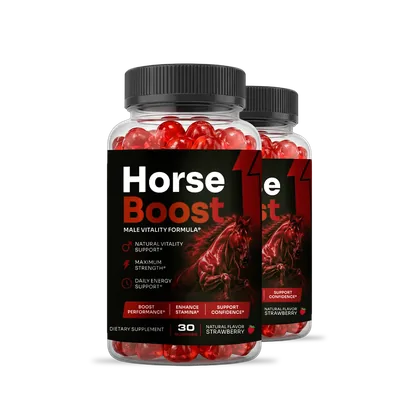
Order Horse Boost On The Official WebsiteOne gummy a day · 30 to a bottle · lot HOR-26/HO-6816
Who should actually care about it
Anyone with existing liver disease, anyone who has had drug-induced liver injury before, and anyone taking a medicine with a known hepatic signal of its own. For that group the answer is not to reason from the blend size but to raise the bottle with whoever manages their care.
There is a second group worth naming, and it is the one this desk worries about more: people stacking. A share of 82 mg is small; a share of 82 mg alongside a dedicated 600 mg ashwagandha capsule, which is an extremely common purchase, is a different exposure entirely. The same logic applies to the green tea extract on this panel, where the USP review of green tea extract and the liver sets out the United States Pharmacopeia's review of concentrated catechins and the liver.
The side effects page carries both, named once each, which is how this desk handles a caution: specifically, rather than as a general warning repeated until it stops being read.
What the Horse Boost label says and does not say
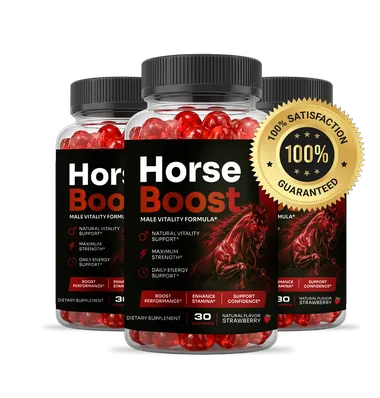
The printed warning on the bottle names four groups: anyone pregnant, anyone nursing, anyone taking medicines and anyone with a medical condition. It does not name the liver specifically, and no supplement label would.
What the label also does not do is publish how much ashwagandha is in the blend, or what it is standardised to. Those two omissions are the reason this post cannot end with a number. A reader with a liver question who wants to work out their exposure cannot do it from this panel, and the honest thing to say is that rather than to reassure them that the amount is small because the blend is.
It probably is small. It is not published.
The balanced answer
Ashwagandha is the best-evidenced name on this panel and the one with the only meaningful safety file. Both halves of that sentence are true and a page that printed only one of them would be doing something this desk has a rule against.
For most adults the practical answer is that a share of an 82 mg blend is a very small exposure, smaller than the trials and smaller than the case reports, and that the sensible precaution is simply not to stack it with a dedicated ashwagandha product. For anyone with a liver history, the answer is a conversation with a clinician rather than with a website.
Neither of those is a dramatic conclusion. Most honest conclusions about supplements are not.
What this panel would need to settle it
One line of print would change this whole post, and it is a line the manufacturer could add tomorrow.
An individual amount for the ashwagandha, with a standardisation marker beside it, would let any reader answer both questions at once. It would say whether the amount is in the range of the trials, and it would let anybody with a liver history calculate their exposure rather than being told it is probably small.
That is not an unreasonable thing to want. The caffeine on this same row carries an individual figure, so the panel already demonstrates that the format allows it, and the dry-powder footnote shows the manufacturer is willing to publish more than the minimum. One more number would do it.
Until it appears, the honest position is the one above: a very small exposure in all likelihood, unpublished in fact, and a reason to avoid stacking rather than a reason to avoid the bottle. If that line is ever added, this post changes and the review date at the foot of the page moves with it.
Sources
- Lopresti AL, Smith SJ, Malvi H, Kodgule R. An investigation into the stress-relieving and pharmacological actions of an ashwagandha (Withania somnifera) extract: A randomized, double-blind, placebo-controlled study. Medicine (Baltimore). 2019;98(37):e17186. doi:10.1097/MD.0000000000017186. PMID 31517876. https://pubmed.ncbi.nlm.nih.gov/31517876/
- Lopresti AL, Drummond PD, Smith SJ. A Randomized, Double-Blind, Placebo-Controlled, Crossover Study Examining the Hormonal and Vitality Effects of Ashwagandha (Withania somnifera) in Aging, Overweight Males. Am J Mens Health. 2019;13(2):1557988319835985. doi:10.1177/1557988319835985. PMID 30854916. https://pubmed.ncbi.nlm.nih.gov/30854916/
- Ambiye VR, Langade D, Dongre S, Aptikar P, Kulkarni M, Dongre A. Clinical Evaluation of the Spermatogenic Activity of the Root Extract of Ashwagandha (Withania somnifera) in Oligospermic Males: A Pilot Study. Evid Based Complement Alternat Med. 2013;2013:571420. doi:10.1155/2013/571420. PMID 24371462. https://pubmed.ncbi.nlm.nih.gov/24371462/
- Arumugam V, Vijayakumar V, Balakrishnan A, et al. Effects of Ashwagandha (Withania Somnifera) on stress and anxiety: A systematic review and meta-analysis. Explore (NY). 2024;20(6):103062. doi:10.1016/j.explore.2024.103062. PMID 39348746. https://pubmed.ncbi.nlm.nih.gov/39348746/
- Björnsson HK, Björnsson ES, Avula B, et al. Ashwagandha-induced liver injury: A case series from Iceland and the US Drug-Induced Liver Injury Network. Liver Int. 2020;40(4):825-829. doi:10.1111/liv.14393. PMID 31991029. https://pubmed.ncbi.nlm.nih.gov/31991029/
- Philips CA, Valsan A, Theruvath AH, et al. Ashwagandha-induced liver injury-A case series from India and literature review. Hepatol Commun. 2023;7(10). doi:10.1097/HC9.0000000000000270. PMID 37756041. https://pubmed.ncbi.nlm.nih.gov/37756041/
- Oketch-Rabah HA, Roe AL, Rider CV, et al. United States Pharmacopeia (USP) comprehensive review of the hepatotoxicity of green tea extracts. Toxicol Rep. 2020;7:386-402. doi:10.1016/j.toxrep.2020.02.008. PMID 32140423. https://pubmed.ncbi.nlm.nih.gov/32140423/