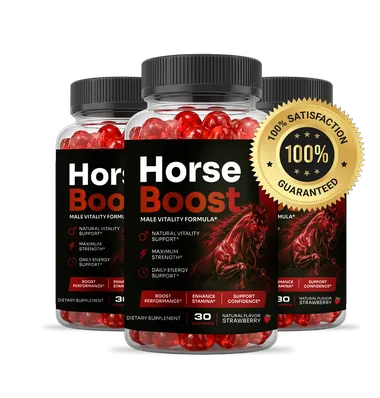
Horse Boost Official Website › Ingredients
IngredientsWhat Is in Horse Boost? The Nine Ingredients on the Label
Horse Boost has one active row: an 82 mg blend of nine ingredients.
The blend includes muira puama, maca, catuaba, green tea, ashwagandha, L-arginine, tribulus and horny goat weed, plus 5 mg of caffeine. The footnote puts it at about 567 mg of dry powders.
Compare with the full Supplement Facts panel.
Six of these nine appear in the seller's advertising. Nine are printed on the bottle. This page works from the bottle.
How to read the Horse Boost blend row before reading the nine
A proprietary blend is a legal arrangement, not an accident. A manufacturer may group several ingredients under one total and decline to publish the split, and a great many products in this category do exactly that. What a reader gets in return is a single number, and that number is still worth something: nothing on the row can be larger than 82 mg, so every comparison below has a hard upper bound.
Two further facts narrow it. The caffeine is printed at 5 mg, which leaves 77 mg for the other eight. And the double-dagger footnote describes the row as equivalent to approximately 567 mg of dry powders, which is an average concentration rather than a per-ingredient ratio, but does bound the raw plant material behind it.
What none of that gives is a dose for any one plant. Where a section below says a trial used 1,500 mg, that is the trial, not this bottle. The honest version of every line on this page is: the research tested X, and this blend as a whole is 82 mg.
The nine Horse Boost ingredients, one at a time
In the order the panel prints them, with the published trials linked inline rather than parked in a list at the bottom.
Muira Puama Extract
Ptychopetalum olacoidesinside the 82 mg rowAn Amazonian root and bark, traditionally called potency wood, and the ingredient on this row with the thinnest human record. Searching PubMed for clinical work in men returns nothing controlled. The only human study of muira puama in the database is the only human study of muira puama on PubMed, an open-label questionnaire study of a muira puama and ginkgo combination in 202 women, whose own author wrote that a double-blind study was planned.
The rest is laboratory work: a rat cell study of a four-herb combination containing muira puama in rat penile smooth muscle cells, and the chemical analysis of Ptychopetalum olacoides establishing what is actually in the plant. Neither tells a buyer what a share of 77 milligrams will do. This desk's position is that muira puama belongs on the label as a traditional botanical and nowhere near a claim.
Maca Extract
Lepidium meyeniiinside the 82 mg rowThe best-studied plant on the row, and the one whose dose gap is easiest to state. the 1,500–3,000 mg maca trial in healthy men gave healthy men 1,500 mg or 3,000 mg a day for twelve weeks and reported an effect on self-reported sexual desire with no change in serum testosterone, which is a result worth reading carefully: the authors specifically separated the two.
a 2023 randomised trial of maca in late-onset hypogonadism used 1,000 mg three times a day for twelve weeks in men with late-onset hypogonadism. a systematic review of maca and sexual function pooled the earlier trials and found the evidence suggestive rather than settled, and a meta-analysis of maca and semen parameters looked at semen parameters specifically.
Every one of those figures is in grams. The whole blend here is eighty-two milligrams. Maca is the ingredient a buyer is most likely to have heard of and the one where the arithmetic is least forgiving.
Catuaba Extract
species not stated on the labelinside the 82 mg rowCatuaba is a trade name in Brazil rather than a single plant, and the panel does not say which one it means. That matters more here than it would for a named species. the analysis of fourteen commercial catuaba barks examined fourteen commercial catuaba preparations and found that a minority contained the drug their own labels claimed, more than half were adulterated with a different crude drug, and none of the extracts affected rabbit corpus cavernosum in vitro.
The positive work is animal work: the rodent fatigue and antioxidant work on Trichilia catigua on fatigue and antioxidant measures, and the mouse study of a Trichilia catigua fraction on a specific fraction in mice. the isolated-tissue study of the Catuama preparation tested the combination product Catuama rather than catuaba alone. There is no controlled human trial of catuaba at any dose.
Green Tea Extract
Camellia sinensisinside the 82 mg rowOn this panel the green tea extract is also the source of the printed caffeine. Green tea's own literature is large, and the part relevant to a supplement is the safety part. the USP review of green tea extract and the liver reviewed the hepatotoxicity record and set out the conditions under which concentrated catechin extracts have been associated with liver injury; the DILIN analysis of catechin-containing supplements is the American Drug-Induced Liver Injury Network analysis behind much of it.
Those reports concern doses of concentrated catechins far above anything that fits inside this blend, frequently taken on an empty stomach and frequently in weight-loss products. Naming the risk here is a matter of completeness rather than alarm: the amount on this row is small, and the reason to know about it is if this gummy is being taken alongside a separate green tea supplement.
Caffeine
5 mg, the only printed figureFive milligrams. the review behind the 400 mg a day adult caffeine figure is the review behind the widely quoted figure of up to 400 mg a day being unassociated with adverse effects in healthy adults, and the survey work on ordinary daily caffeine intake is the survey work on what people actually consume. Four hundred milligrams is eighty times what is on this panel.
For context, a mug of brewed coffee carries roughly eighty to two hundred milligrams and a cup of tea around forty. Five milligrams is closer to a square of dark chocolate. Nobody should expect a lift from it, and nobody should expect it to affect their sleep. It is on the label because the green tea extract brings it, and printing it is the correct thing to have done.
Ashwagandha
Withania somniferainside the 82 mg rowThe ingredient responsible for the smallest working dose in this whole comparison. the 240 mg ashwagandha stress trial gave sixty adults 240 mg of a standardised extract once daily and reported changes on stress measures against placebo. the 600 mg ashwagandha trial in overweight, ageing men used a preparation delivering 21 mg of withanolide glycosides a day for eight weeks in overweight men aged forty to seventy, which is the trial closest to what this bottle is sold for. the 675 mg ashwagandha pilot study in oligospermic men used 675 mg a day in three doses, and a 2024 meta-analysis of ashwagandha for stress and anxiety pooled the stress and anxiety literature.
Two hundred and forty milligrams is about three times the entire 82 mg blend, and it is the cheapest positive result available for any of these nine. It is also the ingredient with the most substantial safety signal: the Icelandic and US liver-injury case series and the Indian liver-injury case series and literature review document liver injury associated with ashwagandha products, which is a small number of cases against very wide use and is still the reason anyone with liver disease should raise this bottle with their clinician.
L-Arginine
inside the 82 mg rowAn amino acid, and the row's clearest example of a gram-scale ingredient in a milligram-scale blend. the 5 g a day arginine trial gave men with organic erectile dysfunction five grams a day for six weeks. the meta-analysis of arginine supplements and erectile function pooled the arginine trials, and the dose-response meta-analysis of arginine and blood pressure is the dose-response meta-analysis on blood pressure, which works in grams throughout and found nothing beyond nine grams a day. the pharmacokinetics of oral L-arginine describes how little of an oral dose survives first-pass metabolism, which is why the trial doses are so large.
Five grams is five thousand milligrams. The whole blend on this panel is eighty-two. There is no reading of that arithmetic under which the arginine on this row is doing what the arginine in those trials did.
Tribulus Terrestris
Tribulus terrestrisinside the 82 mg rowOne of the three names on the panel that the seller's advertising leaves out, and one of the better-studied. the tribulus versus placebo trial in erectile dysfunction gave 800 mg a day for thirty days against placebo. the 1,500 mg tribulus randomised trial was a larger multicentre randomised trial using film-coated tablets of a 35-to-45-to-1 extract at 250 mg each. the tribulus androgen study that found nothing looked specifically at androgen production in young men and found none. the 2025 systematic review of tribulus trials and the 2026 tribulus meta-analysis are the two most recent attempts to pool it all, and they disagree less about the direction than about whether the evidence is strong enough to act on.
There is also a safety note worth one sentence: the tribulus nephrotoxicity case report is a case report of severe kidney injury in a young man taking tribulus. One case report is one case report. It is here because a reader deciding about a botanical deserves the whole file rather than the flattering half of it.
Horny Goat Weed Extract
Epimedium speciesinside the 82 mg rowThe last name on the row, also absent from the advertising, and the one whose laboratory story is most often oversold. the laboratory work on icariin and PDE5 showed that icariin, the marker compound, inhibits phosphodiesterase-5 in vitro. That is the same enzyme a well-known class of prescription drugs targets, and the comparison is made constantly in this category. It is a test-tube result and the potencies involved are orders of magnitude apart.
the human pharmacokinetics of standardised epimedium is the useful one: single oral doses of 370, 740 and 1,110 mg of a standardised prenylflavonoid extract in thirty healthy men, measuring what actually reaches the bloodstream. the one placebo-controlled human epimedium trial is the one placebo-controlled human trial of epimedium in the database, and it was a crossover study for Gulf War illness. the systematic review of Epimedium chemistry and toxicity reviews the chemistry and the toxicity together.
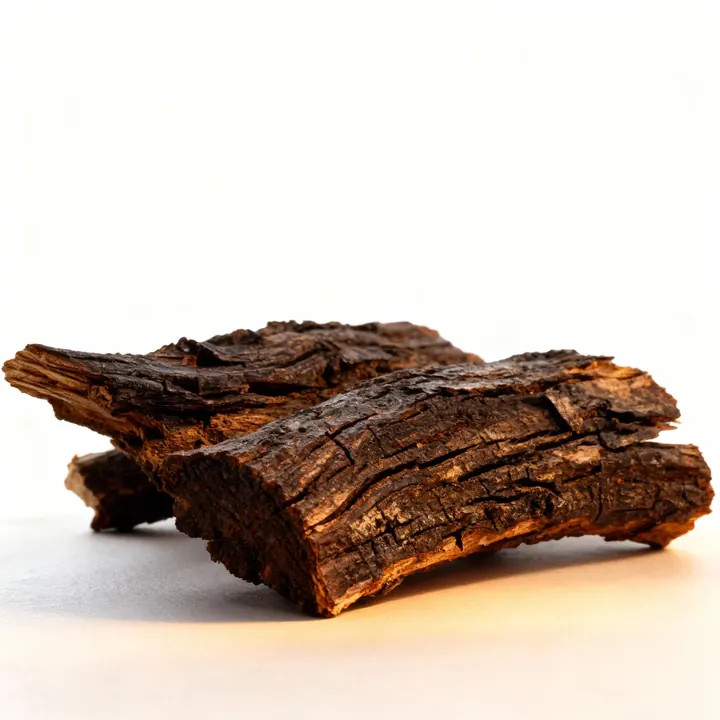
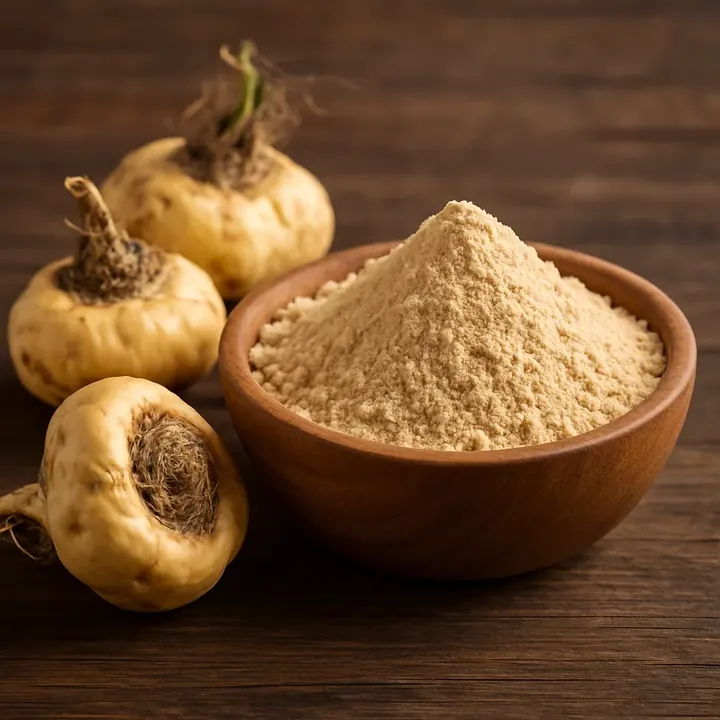
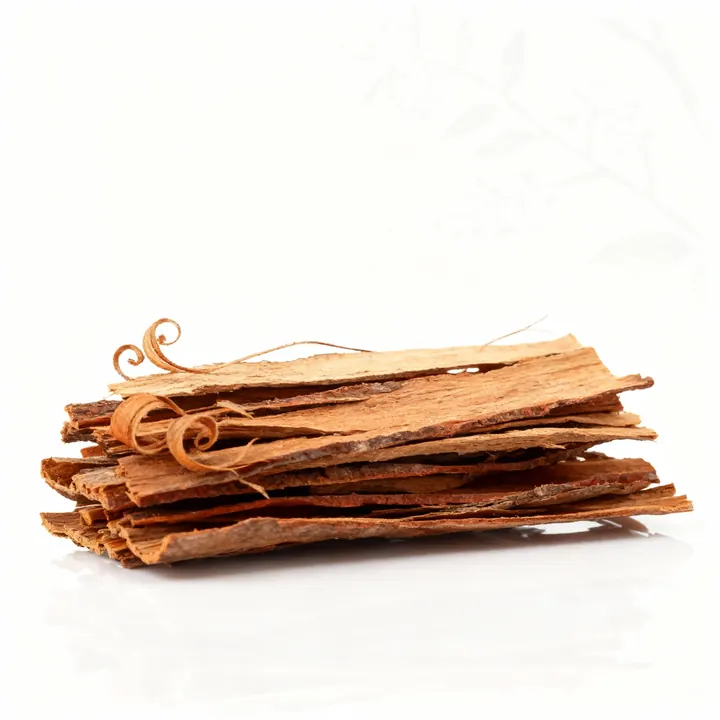
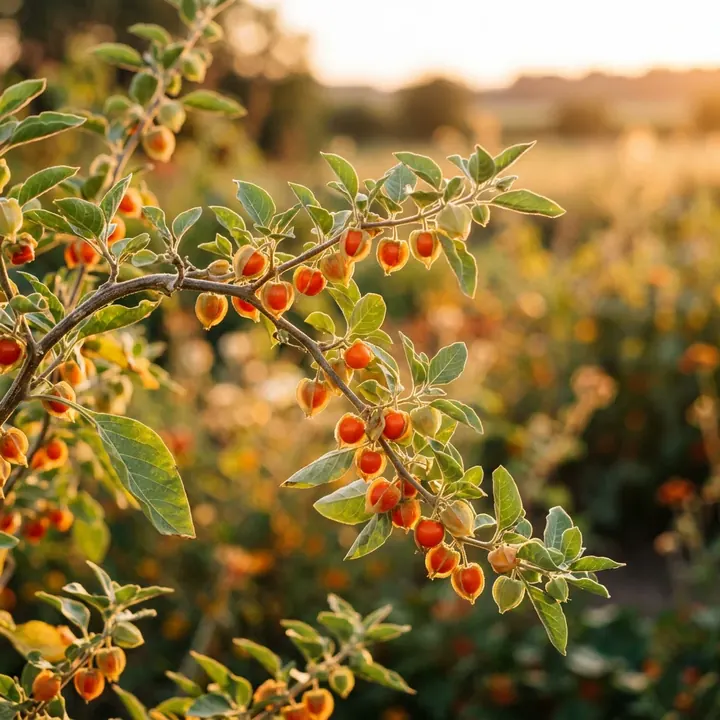
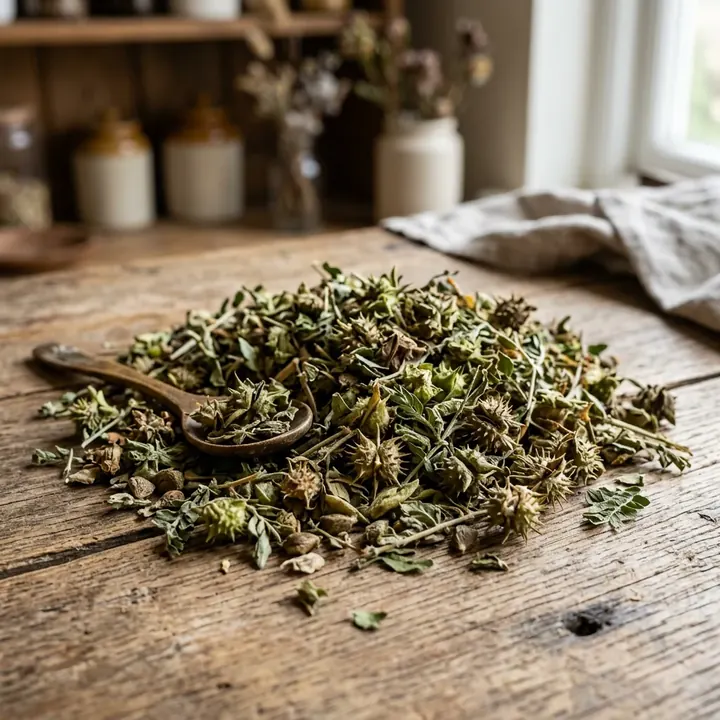
The five Horse Boost botanicals the seller photographs
Five of the nine have a vendor photograph. Green tea, caffeine, L-arginine and epimedium do not, which is a marketing decision rather than a formulation one.
What is in a Horse Boost gummy besides the blend
| Other ingredient | What it is doing |
|---|---|
| Corn Syrup | Bulk sweetener and the body of the gummy |
| Cane Sugar | The second sweetener; the two together make the 3 g of added sugar |
| Water | Solvent |
| Apple Pectin | The gelling agent, which is what makes this a plant-set gummy rather than a gelatin one |
| Sorbitol Liquid | Humectant and secondary sweetener; large amounts of sorbitol are laxative, though not at the level in one gummy |
| Natural Flavors | The strawberry |
| Citric Acid | Acidity and tartness |
| Sodium Citrate Dihydrate | Buffer, and the source of the 4 mg of sodium |
Apple pectin is worth one line of its own. It is why this gummy is set with fruit fibre rather than with gelatin, which is the difference that matters to anyone avoiding animal products. The label carries a vegetarian mark, and the other-ingredients list supports it.
There is no allergen statement on the artwork, and no gluten or dairy declaration in the ingredient list itself. The gluten-free and dairy-free roundels in the seal set are marketing artwork rather than label declarations, and the testing page says so. Anyone with a diagnosed allergy should treat the roundels as a starting point for a question to the distributor rather than as an answer.
Who publishes this Horse Boost website?
Fourteen records, each fetched from the NCBI service rather than remembered, and each swept twice for retractions.
- Gonzales GF, Córdova A, Vega K, et al. Effect of Lepidium meyenii (MACA) on sexual desire and its absent relationship with serum testosterone levels in adult healthy men. Andrologia. 2002;34(6):367-72. doi:10.1046/j.1439-0272.2002.00519.x. PMID 12472620. https://pubmed.ncbi.nlm.nih.gov/12472620/
- Shin D, Jeon SH, Piao J, et al. Efficacy and Safety of Maca (Lepidium meyenii) in Patients with Symptoms of Late-Onset Hypogonadism: A Randomized, Double-Blind, Placebo-Controlled Clinical Trial. World J Mens Health. 2023;41(3):692-700. doi:10.5534/wjmh.220112. PMID 36593713. https://pubmed.ncbi.nlm.nih.gov/36593713/
- Lopresti AL, Smith SJ, Malvi H, Kodgule R. An investigation into the stress-relieving and pharmacological actions of an ashwagandha (Withania somnifera) extract: A randomized, double-blind, placebo-controlled study. Medicine (Baltimore). 2019;98(37):e17186. doi:10.1097/MD.0000000000017186. PMID 31517876. https://pubmed.ncbi.nlm.nih.gov/31517876/
- Ambiye VR, Langade D, Dongre S, Aptikar P, Kulkarni M, Dongre A. Clinical Evaluation of the Spermatogenic Activity of the Root Extract of Ashwagandha (Withania somnifera) in Oligospermic Males: A Pilot Study. Evid Based Complement Alternat Med. 2013;2013:571420. doi:10.1155/2013/571420. PMID 24371462. https://pubmed.ncbi.nlm.nih.gov/24371462/
- Chen J, Wollman Y, Chernichovsky T, Iaina A, Sofer M, Matzkin H. Effect of oral administration of high-dose nitric oxide donor L-arginine in men with organic erectile dysfunction: results of a double-blind, randomized, placebo-controlled study. BJU Int. 1999;83(3):269-73. doi:10.1046/j.1464-410x.1999.00906.x. PMID 10233492. https://pubmed.ncbi.nlm.nih.gov/10233492/
- Tangphao O, Grossmann M, Chalon S, Hoffman BB, Blaschke TF. Pharmacokinetics of intravenous and oral L-arginine in normal volunteers. Br J Clin Pharmacol. 1999;47(3):261-6. doi:10.1046/j.1365-2125.1999.00883.x. PMID 10215749. https://pubmed.ncbi.nlm.nih.gov/10215749/
- Santos CA, Reis LO, Destro-Saade R, Luiza-Reis A, Fregonesi A. Tribulus terrestris versus placebo in the treatment of erectile dysfunction: A prospective, randomized, double blind study. Actas Urol Esp. 2014;38(4):244-8. doi:10.1016/j.acuro.2013.09.014. PMID 24630840. https://pubmed.ncbi.nlm.nih.gov/24630840/
- Kamenov Z, Fileva S, Kalinov K, Jannini EA. Evaluation of the efficacy and safety of Tribulus terrestris in male sexual dysfunction-A prospective, randomized, double-blind, placebo-controlled clinical trial. Maturitas. 2017;99:20-26. doi:10.1016/j.maturitas.2017.01.011. PMID 28364864. https://pubmed.ncbi.nlm.nih.gov/28364864/
- Teo YL, Cheong WF, Cazenave-Gassiot A, et al. Pharmacokinetics of Prenylflavonoids following Oral Ingestion of Standardized Epimedium Extract in Humans. Planta Med. 2019;85(4):347-355. doi:10.1055/a-0806-7673. PMID 30522143. https://pubmed.ncbi.nlm.nih.gov/30522143/
- Ning H, Xin ZC, Lin G, Banie L, Lue TF, Lin CS. Effects of icariin on phosphodiesterase-5 activity in vitro and cyclic guanosine monophosphate level in cavernous smooth muscle cells. Urology. 2006;68(6):1350-4. doi:10.1016/j.urology.2006.09.031. PMID 17169663. https://pubmed.ncbi.nlm.nih.gov/17169663/
- Kletter C, Glasl S, Presser A, et al. Morphological, chemical and functional analysis of catuaba preparations. Planta Med. 2004;70(10):993-1000. doi:10.1055/s-2004-832627. PMID 15490329. https://pubmed.ncbi.nlm.nih.gov/15490329/
- Waynberg J, Brewer S. Effects of Herbal vX on libido and sexual activity in premenopausal and postmenopausal women. Adv Ther. 2000;17(5):255-62. doi:10.1007/BF02853164. PMID 11186145. https://pubmed.ncbi.nlm.nih.gov/11186145/
- Oketch-Rabah HA, Roe AL, Rider CV, et al. United States Pharmacopeia (USP) comprehensive review of the hepatotoxicity of green tea extracts. Toxicol Rep. 2020;7:386-402. doi:10.1016/j.toxrep.2020.02.008. PMID 32140423. https://pubmed.ncbi.nlm.nih.gov/32140423/
- Nawrot P, Jordan S, Eastwood J, Rotstein J, Hugenholtz A, Feeley M. Effects of caffeine on human health. Food Addit Contam. 2003;20(1):1-30. doi:10.1080/0265203021000007840. PMID 12519715. https://pubmed.ncbi.nlm.nih.gov/12519715/
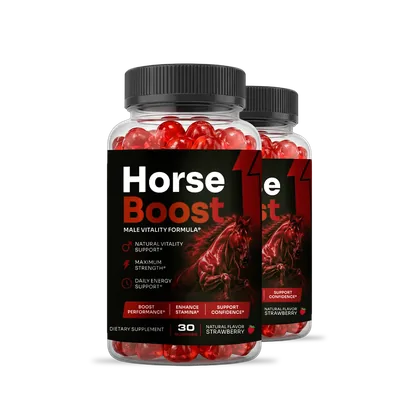
Order Horse Boost once the blend row makes sense
Nine names, one 82 mg row, and every trial dose printed above so the comparison is yours to make rather than this desk's to assert.
Two bottles $158 · six bottles $294 · 60 days from purchase
Order Horse Boost On The Official WebsiteOne gummy a day · 30 to a bottle · lot HOR-26/HO-6816