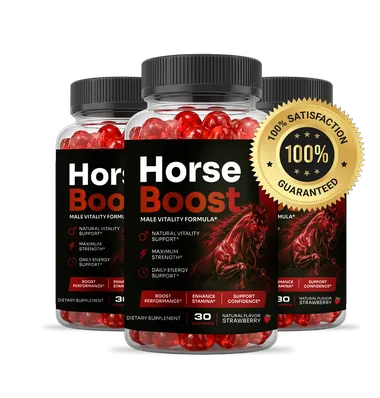
Horse Boost Official Website › Blog › Two Horse Boost Ingredients With No Human Evidence At All
From the deskTwo Horse Boost Ingredients With No Human Evidence At All
Muira puama has no controlled trial in men. Catuaba has none in anybody.
Both are on the Horse Boost blend row and both appear in the advertising. This post goes through what the published record actually contains for each, why they are on the label anyway, and whether a buyer should care.
Two names with nothing behind them
Seven of the nine ingredients on the Horse Boost blend row have human research behind them at some dose. Two do not, and this post is about those two: muira puama and catuaba.
Both appear in the seller's own advertising. Both are traditional botanicals with long histories of use in South America. And for both, a search of the published clinical literature returns nothing that would support putting them on a label in the expectation that a buyer will benefit.
Saying that on a website that sells the product is uncomfortable, and leaving it out would be worse. The ingredients page says the same thing in two paragraphs; this post says it properly.
Muira puama: one human study, and it is about women
Muira puama, Ptychopetalum olacoides, is an Amazonian root and bark sometimes called potency wood. It appears on a great many male vitality labels.
The only human study of it in PubMed is the only human study of muira puama on PubMed, an open-label questionnaire study of a muira puama and ginkgo combination in 202 women, published in 2000. It was not controlled, it was not blinded, it tested a combination product rather than muira puama alone, and its own author noted that a double-blind study was planned. As far as the published record shows, that study did not follow.
What else exists is laboratory work. a rat cell study of a four-herb combination containing muira puama tested a four-herb combination including muira puama on the nitric oxide pathway in rat penile smooth muscle cells. the chemical analysis of Ptychopetalum olacoides established the chemical constituents of the plant. the rodent work behind muira puama's traditional reputation found anticholinesterase activity in rodents, which is interesting and is about a different system entirely.
None of that supports a claim in men, and this desk does not make one.
Catuaba: not even one plant
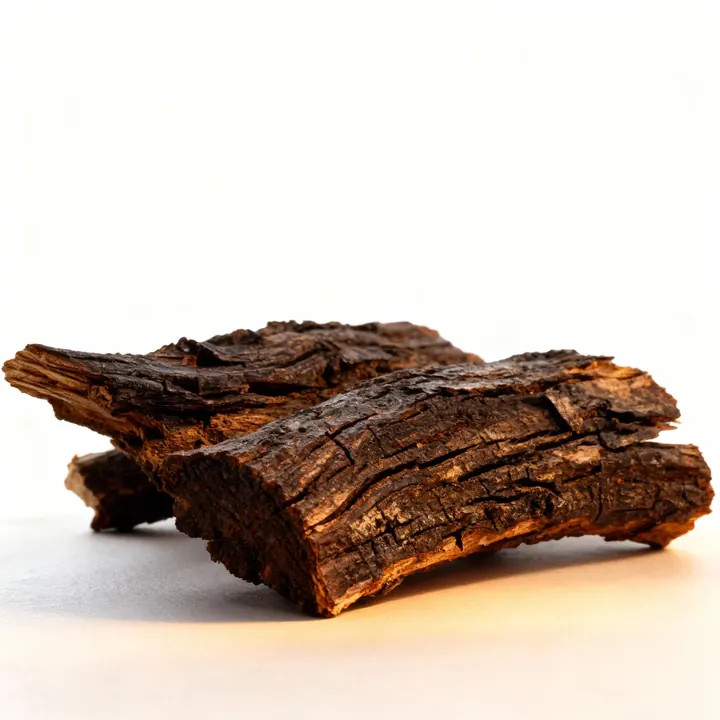
Catuaba is a harder case, because the problem starts before the evidence does.
Catuaba is a trade name used in Brazil for bark from several unrelated species, and the Horse Boost panel prints no botanical name beside it. That matters more than it would for a named species, because the analysis of fourteen commercial catuaba barks examined fourteen commercial catuaba preparations and found that only a minority contained the drug their own labels claimed, more than half were adulterated with a different crude drug entirely, and none of the extracts had any effect on rabbit corpus cavernosum in vitro.
That is a 2004 study of the supply chain rather than of the plant, and it is the most informative thing published about commercial catuaba. The positive work is animal work: the rodent fatigue and antioxidant work on Trichilia catigua on fatigue and antioxidant measures in rodents, and the mouse study of a Trichilia catigua fraction on a specific ethyl-acetate fraction in mice after carotid occlusion. the isolated-tissue study of the Catuama preparation tested Catuama, a combination product, in isolated tissue.
There is no controlled human trial of catuaba at any dose, for any outcome.
Why they are on the label anyway
Three reasons, and only one of them is cynical.
- Recognition. These names have circulated in this category for decades. A label carrying them reads as a proper formula to a buyer who has seen them before, which is most buyers.
- Tradition. Both have genuine histories of traditional use, and traditional use is a real thing even when it is not evidence of a clinical effect. A formulator including them is following a lineage rather than inventing one.
- Label density. Nine names on a blend row reads as more product than four names on the same 82 mg. That is the cynical reason and it should be said out loud.
The third is also the most consequential, because every name added to a fixed blend total reduces every other name's possible share. Nine ingredients in 82 mg is not the same proposition as four ingredients in 82 mg, and the two that have no evidence are occupying room that the two that do have evidence could have used.
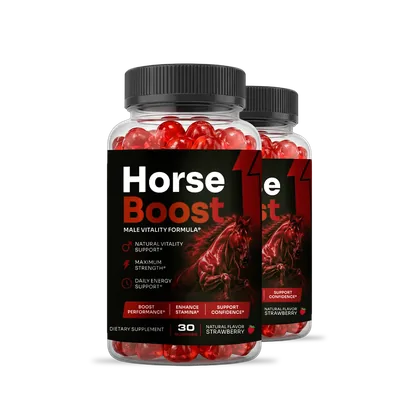
Order Horse Boost knowing which names carry evidence
Seven of the nine have research behind them, at doses this blend cannot reach. Two have none. All nine are printed on the panel.
Two bottles $158 · six bottles $294 · 60 days from purchase
Order Horse Boost On The Official WebsiteOne gummy a day · 30 to a bottle · lot HOR-26/HO-6816
Does it actually matter?
Two honest answers, depending on what you think you are buying.
| If you are buying... | Does this matter? | Why |
|---|---|---|
| A trial result in a bottle | Yes, and so does everything else on this panel | The blend is too small for any ingredient to be at a studied dose, evidenced or not |
| A daily routine with a small botanical input | Marginally | Two inert names in a blend that is small anyway change the proposition very little |
| A specific ingredient at a specific dose | Yes, decisively | This is not the product for that, and a fully disclosed panel is |
| Something safe to take daily | Not really | Neither has a meaningful safety file; the catuaba identity question is about efficacy and adulteration, not toxicity |
The second row is where most buyers of this product actually sit.
The honest summary is that these two names are a transparency problem rather than a safety problem, and a smaller transparency problem than the blend total itself.
There is one wrinkle worth naming, and it belongs to catuaba specifically. The 2004 analysis was about identity and adulteration rather than about efficacy: more than half the preparations examined contained a different crude drug from the one the label claimed. That is a supply-chain finding, and a supply-chain finding is the kind that can matter for safety even when the intended ingredient is inert. It is one more reason the buying route matters more in this category than in most.
What would change this post
Specifically and checkably: a controlled human trial. For muira puama in men, of any size, with any outcome, published and indexed. For catuaba, the same, and ideally preceded by a labelled botanical species.
Neither is an unreasonable thing to ask for. The other seven names on this panel have one, several have half a dozen, and the cost of running a small randomised trial of a botanical is not prohibitive for an industry of this size.
If either appears, this post changes and the review date moves. The mailbox for telling this desk about one is in the footer, and a correction is genuinely the most useful thing anybody sends here.
How to spot this on any label
The general skill is worth more than the specific finding, and it takes about four minutes per product.
- Count the names on the blend row. More names on a fixed total means less of each. Nine is a lot.
- Look for a botanical species. A name with no Latin binomial beside it is a name you cannot look up, and catuaba is the clearest example on this shelf.
- Search the name plus the words randomised and men. Ninety seconds. If nothing controlled comes back, treat the ingredient as tradition rather than as evidence.
- Check whether the marketing names all the ingredients. The Horse Boost advertising names six of nine, and the three it leaves out include two of the better-evidenced ones.
The last one is the most interesting habit to develop. A seller choosing which ingredients to advertise is telling you which names it thinks sell, and that is frequently not the same list as the names with research behind them. The full method is on the choosing a formula page.
The honest position
Muira puama has no controlled trial in men. Catuaba has no controlled trial in anybody, and a 2004 analysis found most commercial preparations were not what their labels said. Both are on this panel.
That is not a scandal and it is not nothing. It is two of nine names on a small blend contributing recognition rather than evidence, in a category where that is close to universal practice. A buyer who knows it is a buyer who is making a decision rather than receiving an impression, which is the whole purpose of a page like this.
Seven of the nine do have research behind them, at doses this bottle cannot reach. That is the larger issue, and it has its own post.
What the advertising choice says about the seller
One detail in this story is worth more attention than the two ingredients, and it is easy to miss because it is about the marketing rather than about the bottle.
The Horse Boost advertising names six ingredients: muira puama, maca, catuaba, green tea, ashwagandha and L-arginine. The printed panel names nine. The three left out are the caffeine, tribulus terrestris and horny goat weed.
Two of those three are among the better-evidenced names on the row. Tribulus has a placebo-controlled trial at 800 mg a day and a larger multicentre study behind it. Epimedium has the only human pharmacokinetic study of a standardised extract in this whole formula. Meanwhile two of the six the advertising does name, muira puama and catuaba, have no controlled human evidence at all.
So the advertised list is not the evidence list. It is the recognition list: the names a buyer in this category has already heard of. That is not dishonest, and it is a useful thing to know about any product page, including this one. The ingredients page here works from the panel rather than from the advertising for exactly that reason.
The general habit is worth taking away. When a seller advertises six ingredients and the label prints nine, read the label: the three left out are frequently the ones a formulator added on purpose.
Sources
- Waynberg J, Brewer S. Effects of Herbal vX on libido and sexual activity in premenopausal and postmenopausal women. Adv Ther. 2000;17(5):255-62. doi:10.1007/BF02853164. PMID 11186145. https://pubmed.ncbi.nlm.nih.gov/11186145/
- Ferrini MG, Garcia E, Abraham A, et al. Effect of ginger, Paullinia cupana, muira puama and l-citrulline, singly or in combination, on modulation of the inducible nitric oxide-NO-cGMP pathway in rat penile smooth muscle cells. Nitric Oxide. 2018;76:81-86. doi:10.1016/j.niox.2018.03.010. PMID 29551532. https://pubmed.ncbi.nlm.nih.gov/29551532/
- Tian X, Guo S, He K, et al. Qualitative and quantitative analysis of chemical constituents of Ptychopetalum olacoides Benth. Nat Prod Res. 2018;32(3):354-357. doi:10.1080/14786419.2017.1354187. PMID 28750557. https://pubmed.ncbi.nlm.nih.gov/28750557/
- Siqueira IR, Fochesatto C, da Silva AL, et al. Ptychopetalum olacoides, a traditional Amazonian “nerve tonic”, possesses anticholinesterase activity. Pharmacol Biochem Behav. 2003;75(3):645-50. doi:10.1016/s0091-3057(03)00113-8. PMID 12895682. https://pubmed.ncbi.nlm.nih.gov/12895682/
- Kletter C, Glasl S, Presser A, et al. Morphological, chemical and functional analysis of catuaba preparations. Planta Med. 2004;70(10):993-1000. doi:10.1055/s-2004-832627. PMID 15490329. https://pubmed.ncbi.nlm.nih.gov/15490329/
- Martins NO, de Brito IM, Araújo SSO, et al. Antioxidant, anticholinesterase and antifatigue effects of Trichilia catigua (catuaba). BMC Complement Altern Med. 2018;18(1):172. doi:10.1186/s12906-018-2222-9. PMID 29866157. https://pubmed.ncbi.nlm.nih.gov/29866157/
- Truiti MT, Soares LM, Longhini R, et al. Trichilia catigua ethyl-acetate fraction protects against cognitive impairments and hippocampal cell death induced by bilateral common carotid occlusion in mice. J Ethnopharmacol. 2015;172:232-7. doi:10.1016/j.jep.2015.05.060. PMID 26099636. https://pubmed.ncbi.nlm.nih.gov/26099636/
- Antunes E, Gordo WM, de Oliveira JF, Teixeira CE, Hyslop S, De Nucci G. The relaxation of isolated rabbit corpus cavernosum by the herbal medicine Catuama and its constituents. Phytother Res. 2001;15(5):416-21. doi:10.1002/ptr.861. PMID 11507734. https://pubmed.ncbi.nlm.nih.gov/11507734/